Ridge Way Garden
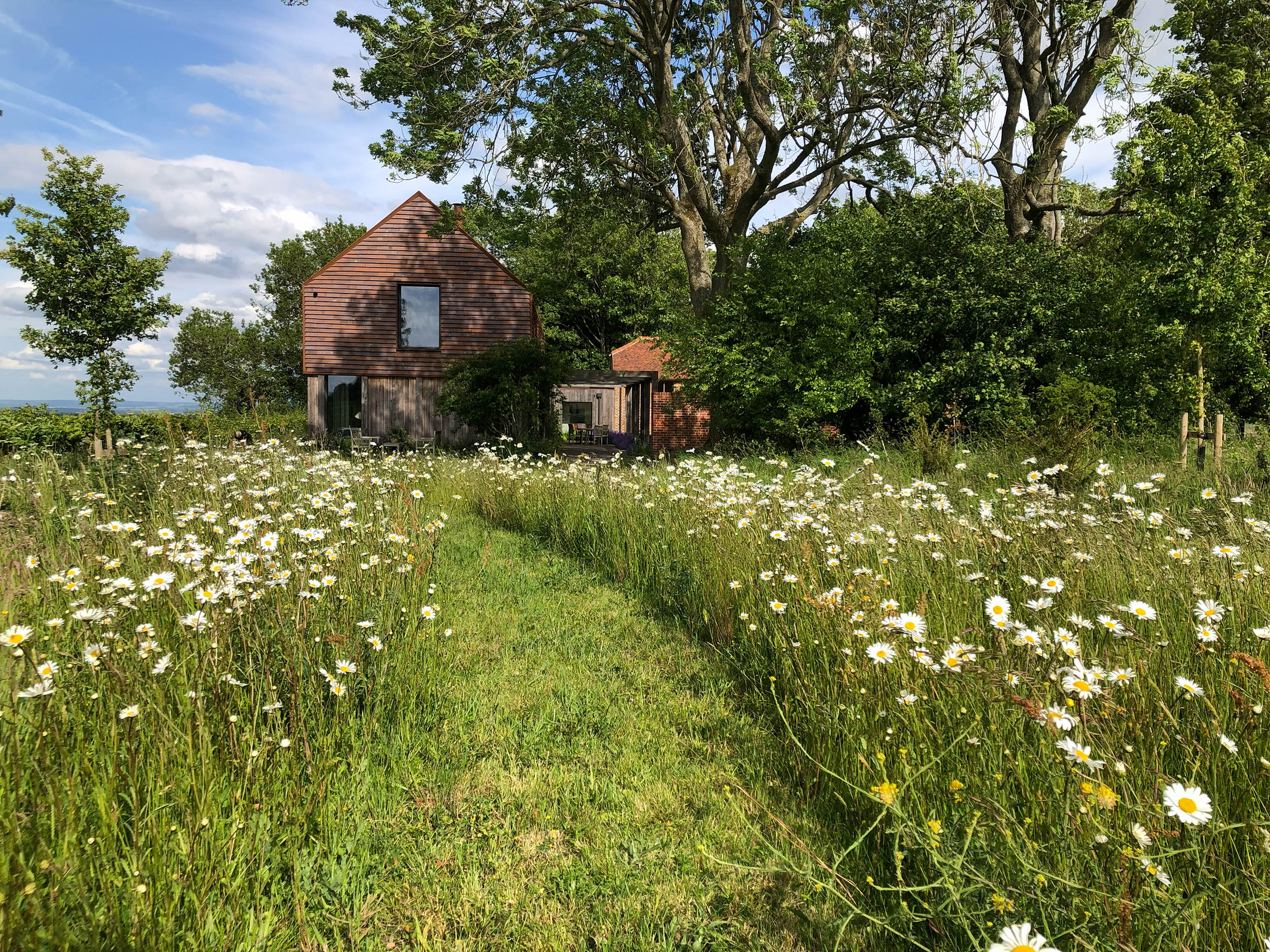
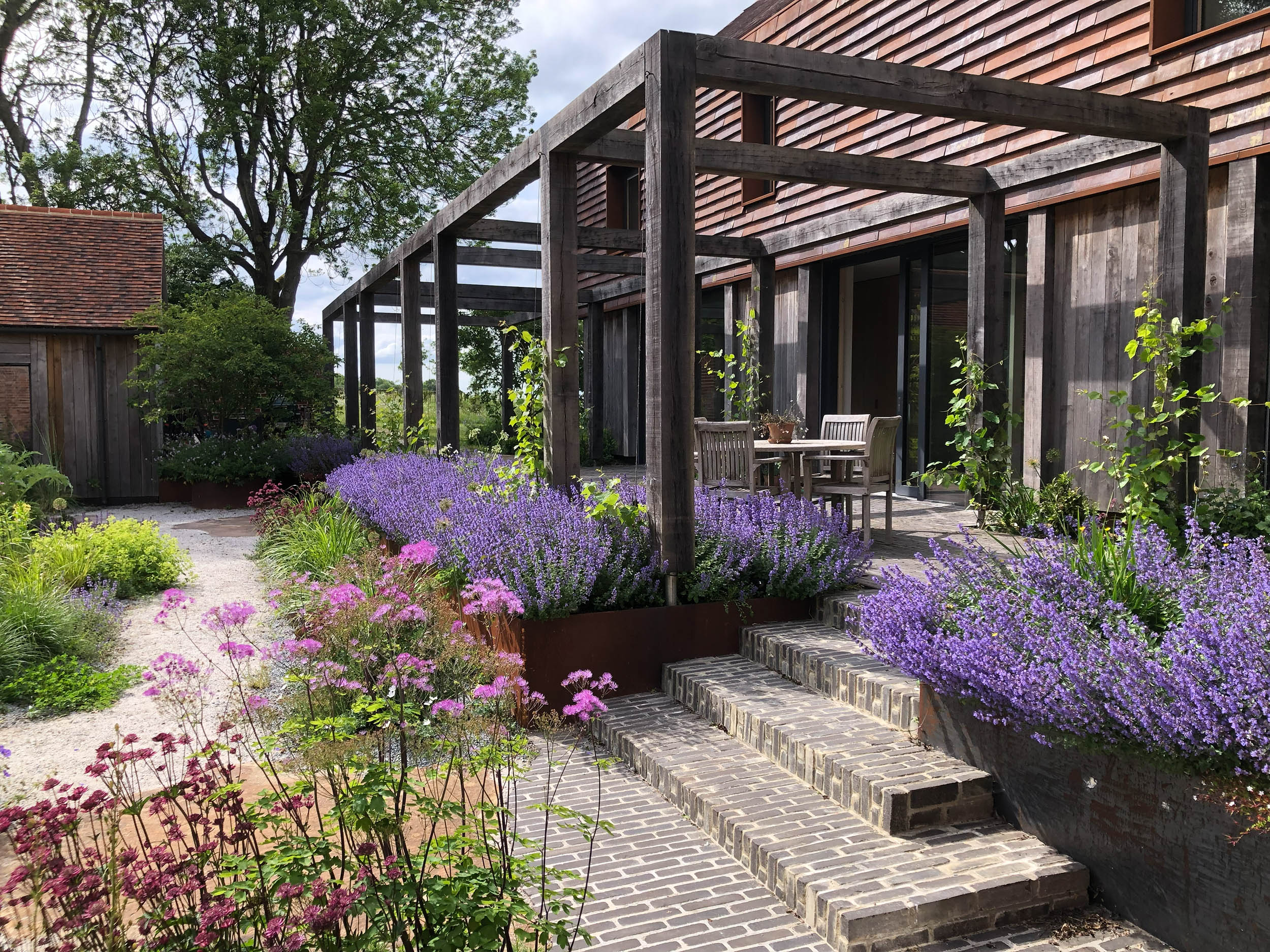
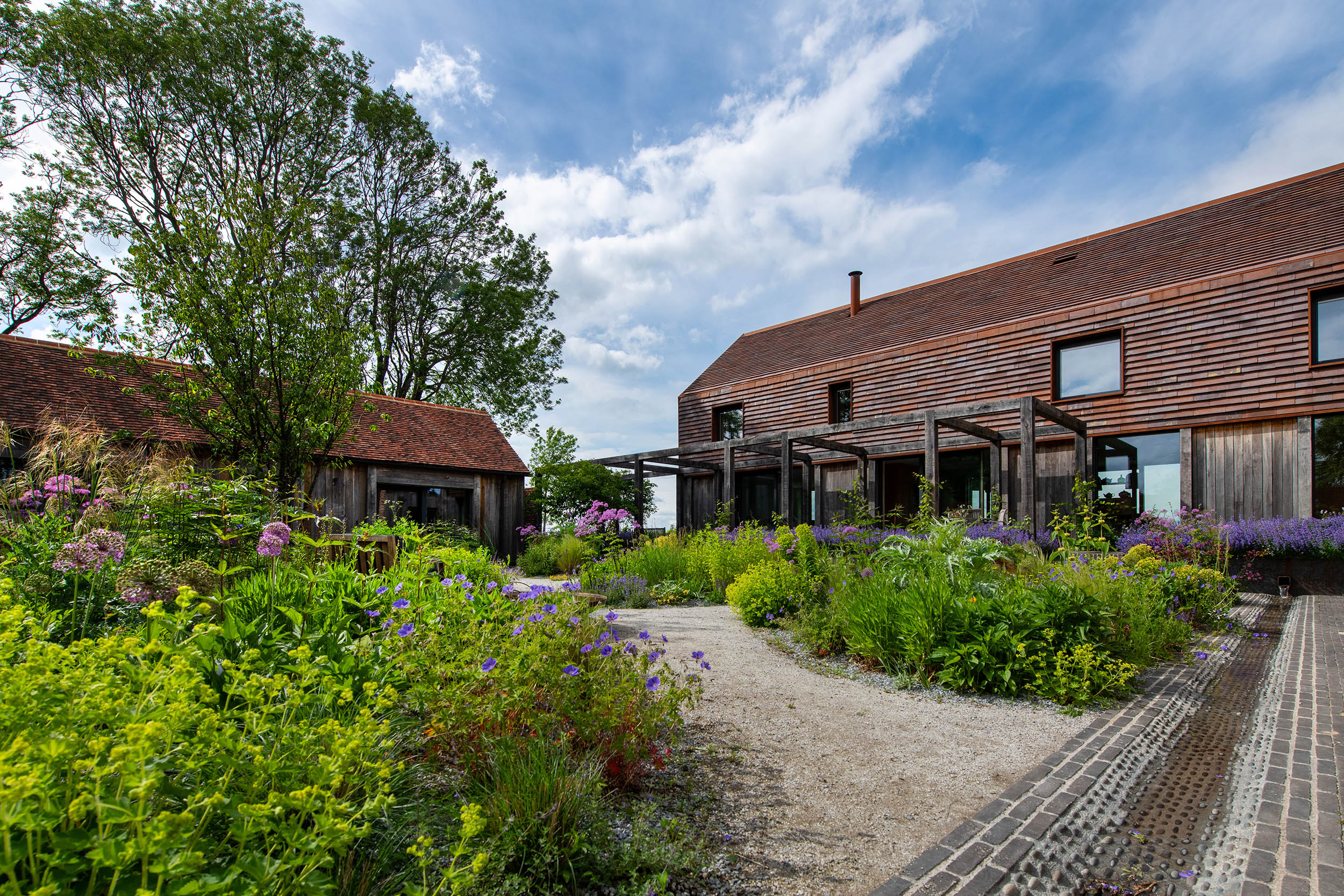
We aimed to bring the meadow up to the buildings and create a sheltered inner courtyard garden within the buildings. The former farmhouse was demolished, concrete surfaces were lifted and a concrete crusher was on-site to process this material into usable sub-base materials for paths and the drive. Any material left over was spread as a base below a bund.
The clients wanted a tennis court but did not want to see it in the landscape. A 3m tall earth and chalk bund was formed with arisings from foundation excavations, the pond excavation and any other earth moving on-site. This bund screened the tennis court form most of the site, whilst still allowing views out to the incredible landscape to the north. The bund also provides some shelter from prevailing winds on this exposed hill-top site. The southern face of the bund was used to ground-mount solar panels. The top layer of the mound was formed with a mix of sub-soil and chalk (decided in discussion with the project ecologist). This low-fertility layer provides the perfect growing medium for calcarious grassland, a rare habitat that has been enhanced and created on-site.
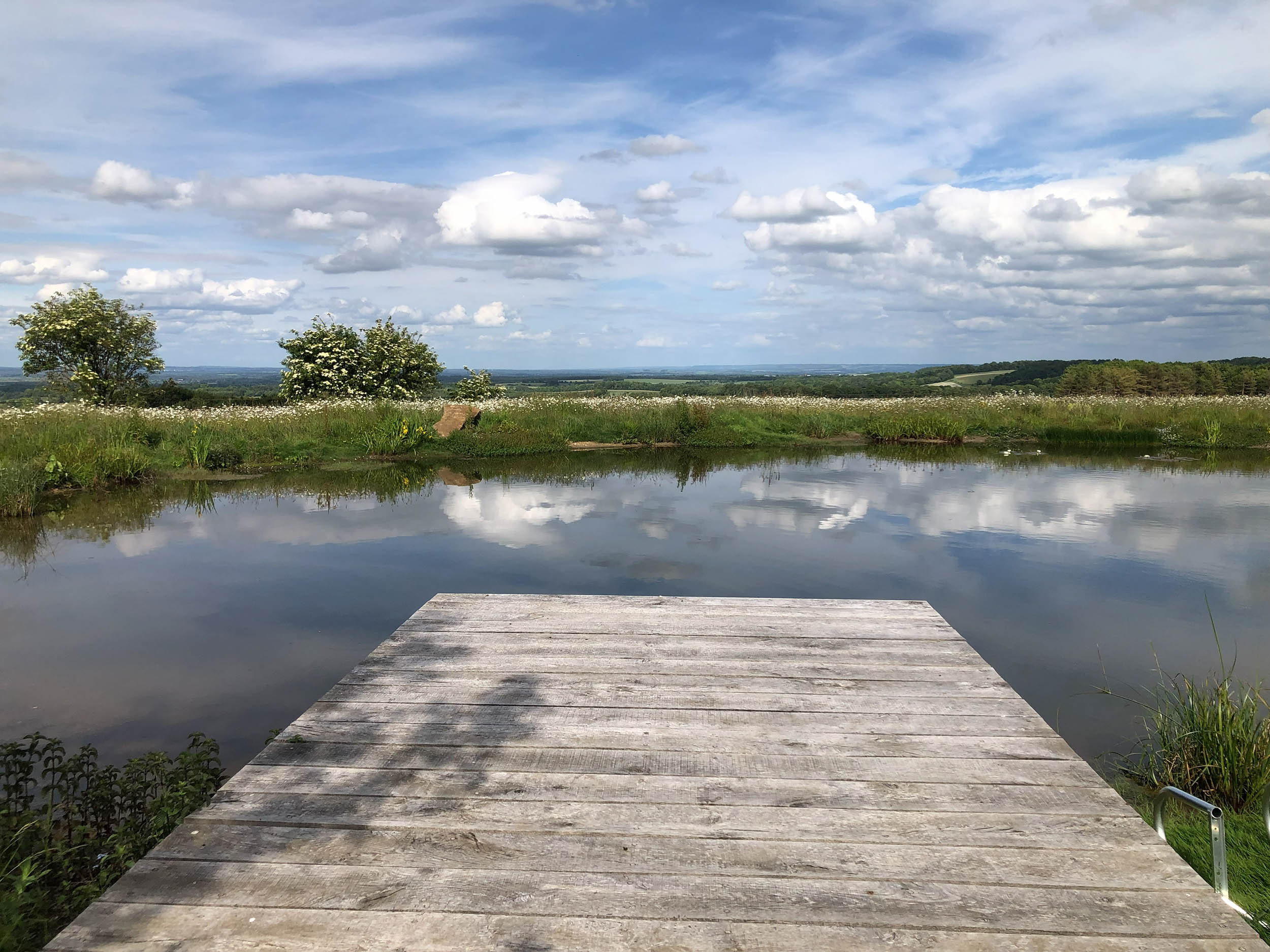
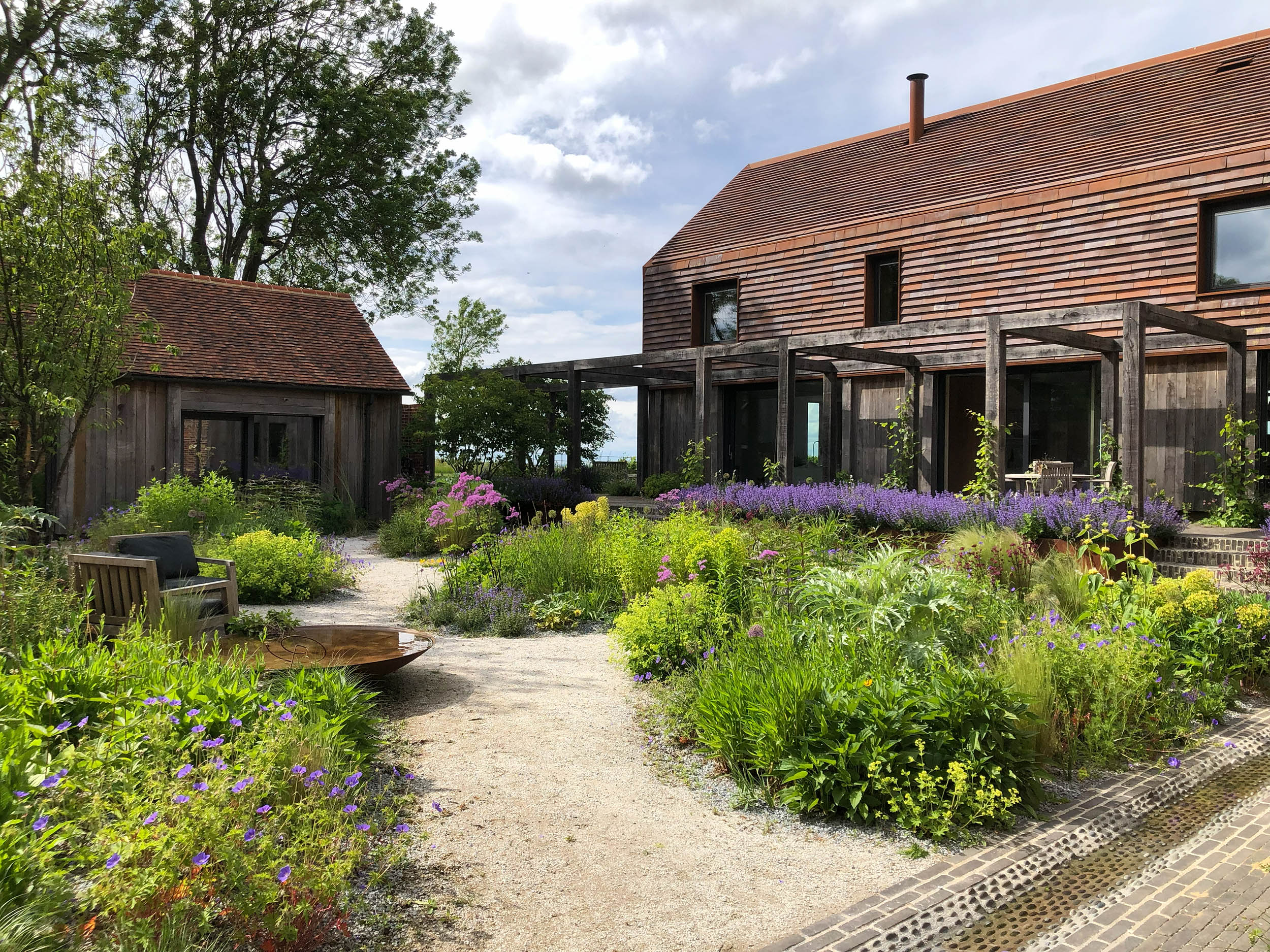
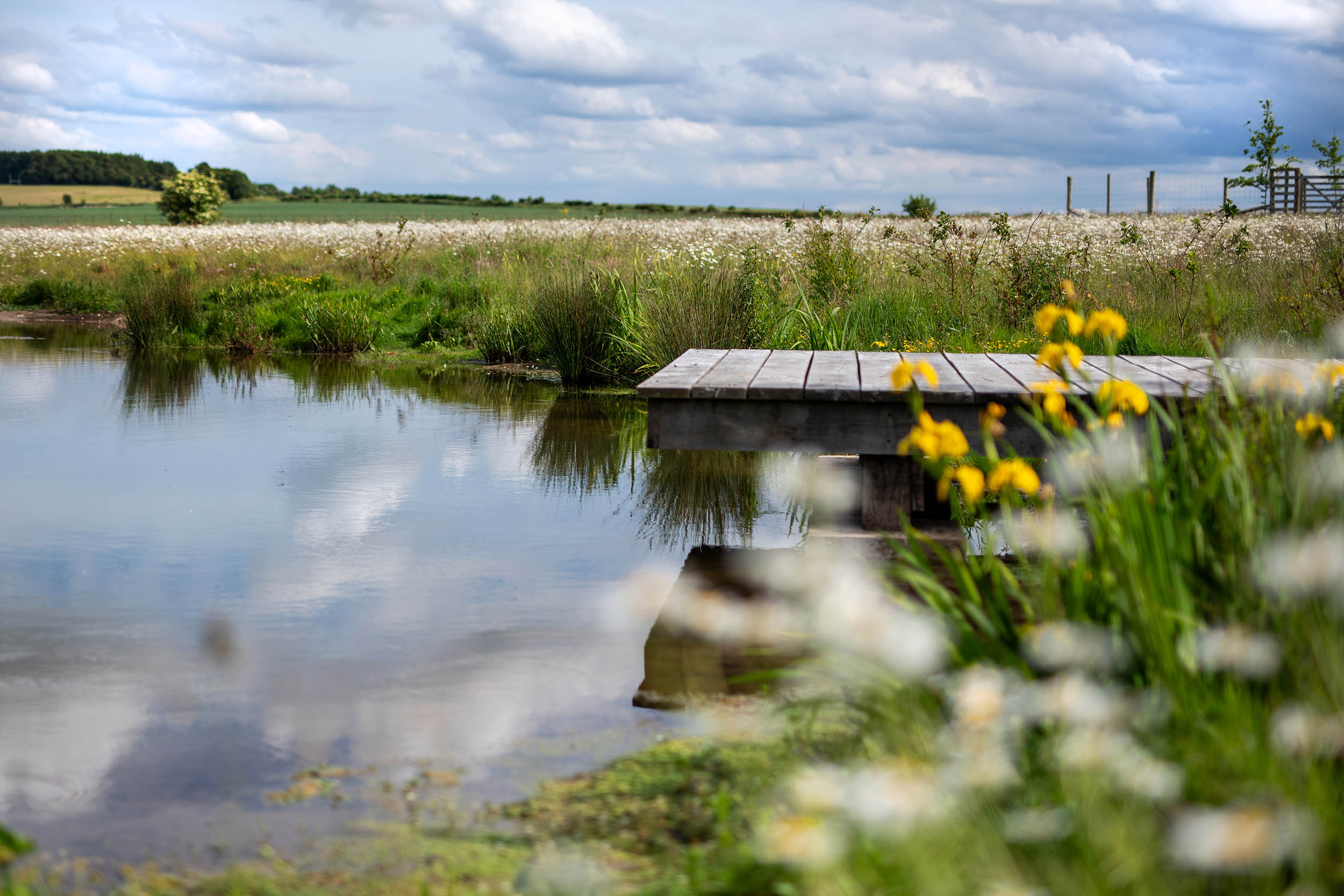
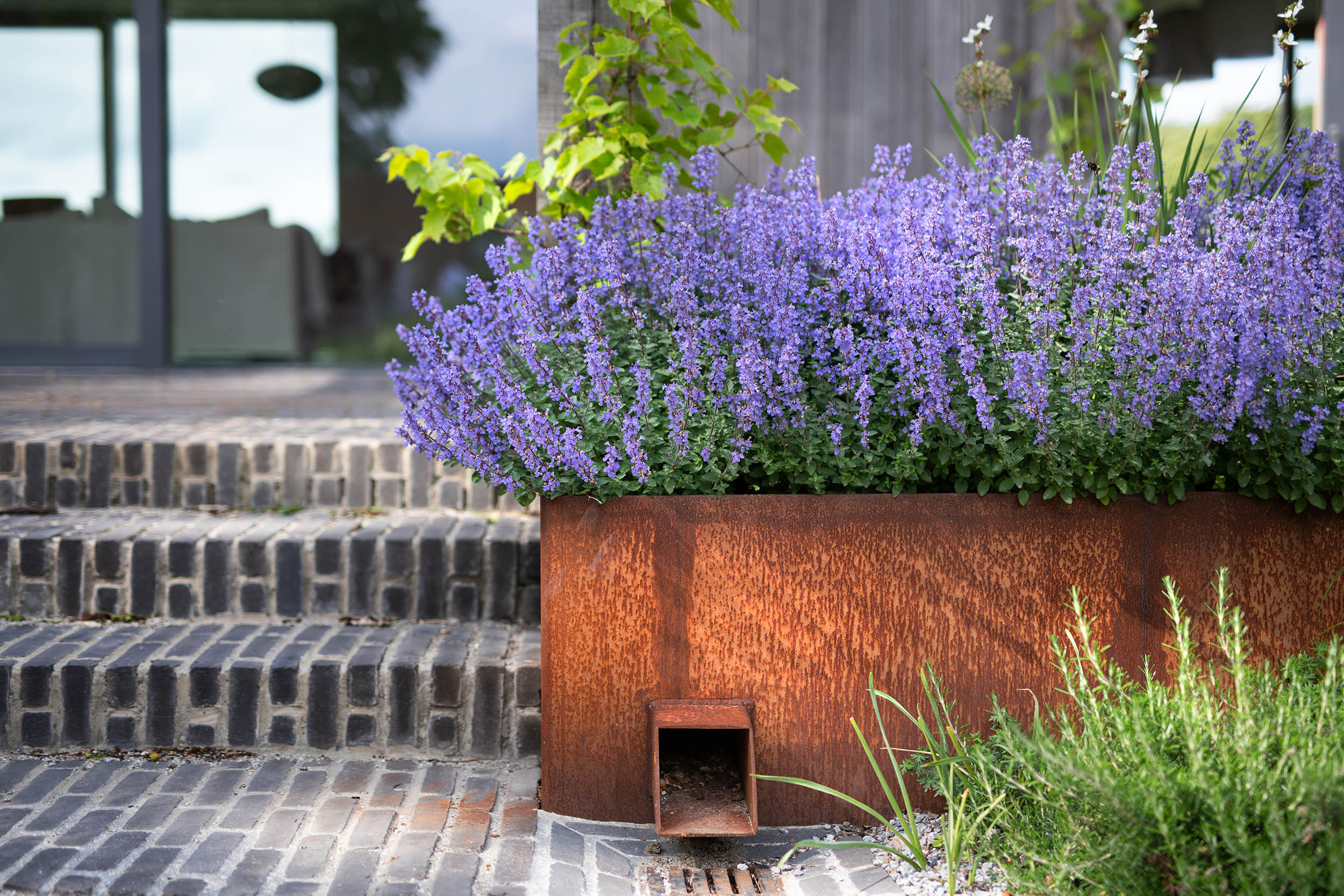
Being on a chalk hill-top the site is a few miles away from any natural water sources. The client is a very keen bird watcher and is very keen to encourage wildlife into the site. We decided to add a substantial pond. In order to keep the pond topped-up it was designed with a connection to all of the surface & roof water drainage from the buildings. All rain water is channelled to the pond. There are decorative spouts formed with corten steel around the courtyard, two of which direct water into a surface pebble rill, this leads to a gully connecting to the pond. If the pond needs topping up there is a borehole, primarily providing water for the house. This also has a connection to the spouts feeding the rill. The pond can be filled from the courtyard rill, introducing the sound of running water to the heart of the garden.
There is around 7 acres of new native woodland planting on-site. The former open fenced paddocks were removed. Copses of trees have been planted across the site to channel views and subtly screen some areas.
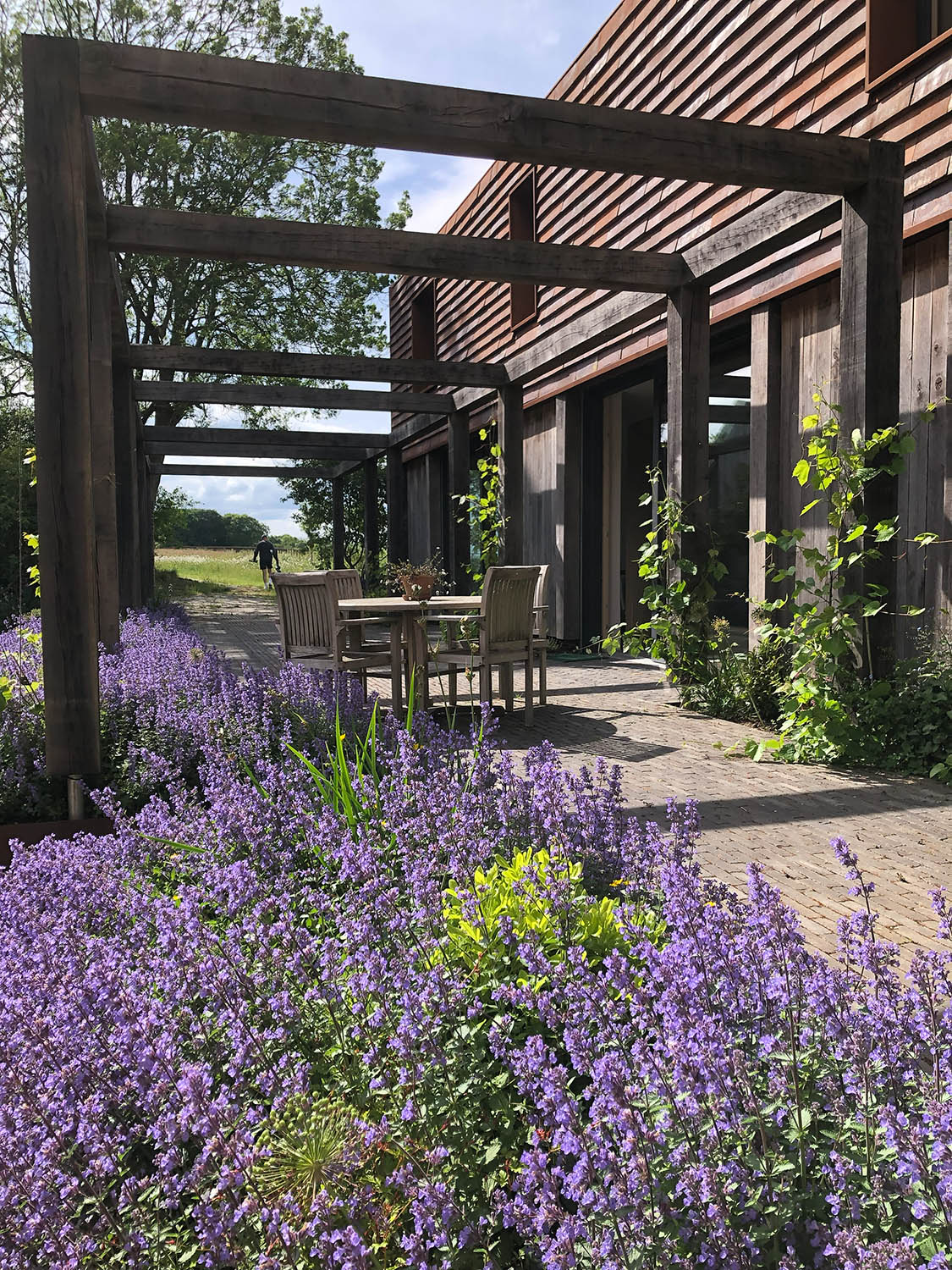
Large irregular stone flags, some weighing up to 1.5 tonnes, were installed as giant stepping stones within the courtyard gravel garden. These were set on sand over the chalk, minimising the use of cement. The rugged quality and scale of these suit the exposed site. In contrast, dark grey clay pavers were used to form steps and terraces around the house. Again these were installed on a sand bed, minimising cement use and allowing for easy recycling/ reuse in the future. The dark tone ensures that the paving settles into the garden and is not too reflective on the south side of the building.
The courtyard has a palette of plants which have a similar character to the native meadow beyond although they are much longer flowering and bolder, offering an enhanced experience of the seasons closer to the house.
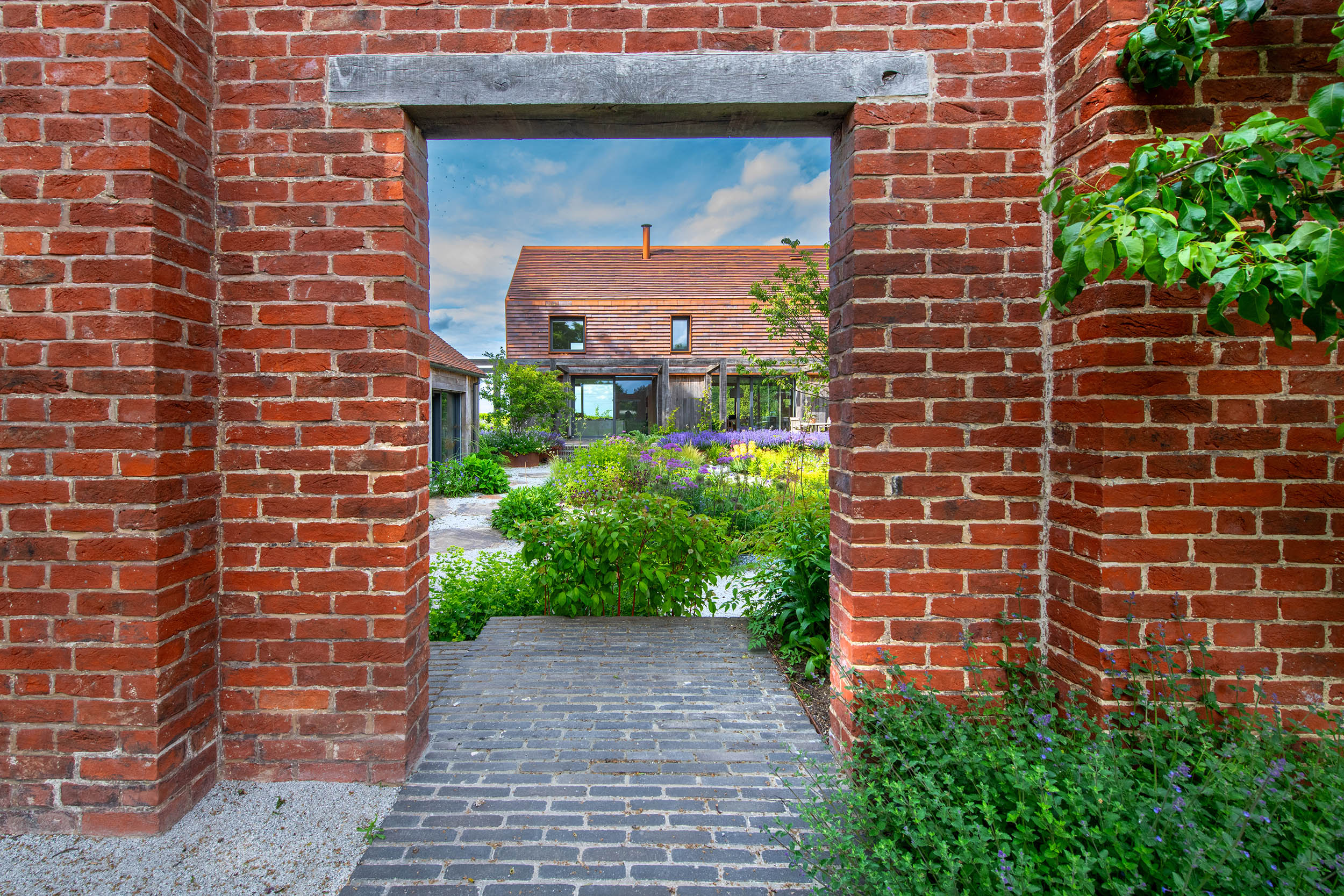
Corten steel raised planters enclose the courtyard, the material references some of the architectural detailing on the house. A new free-standing brick wall marks the southern edge of the courtyard. This has openings linked to primary views from the house, taking the eye through the small veggie garden to the meadow beyond. This wall marks the front elevation of the former farmhouse.
Around 400 tonnes of chalk was imported from a neighbouring farmer, this was excavated whilst he installed a new barn. This material raised the level of the site to one side of the pond, to create a plateau for the pond to feel settled.
A project created with Bestique Landscape and Garden Design.